Argyll's Fancy
Основная информация
| Автор: | Unknown |
|---|---|
| RSCDS: |
 RSCDS HQ publication
|
| Сочинен в России: | Нет |
| Публикация: |
|
| Рекомендуемая музыка: |
|
Параметры
| Тип танца: | Jig |
|---|---|
| Тип сета: | Longwise set |
| Размер: | 4x48 |
| Формат сета: | 4 couples |
| Танцующие пары: | 4 |
Источник:
https://my.strathspey.org/dd/dance/223/
MiniCribs
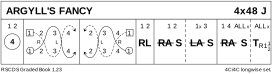
1-8
1s+2s circle 4H round & back
9-16
1s lead down 1 place, cross between 2s & dance down behind 3s, cross LH & dance down behind 4s to bottom of set
17-24
1s lead up 1 place, cross between 4s & dance up behind 3s, cross LH & dance up behind 2s to top places
25-32
1s+2s dance R&L
33-40
1s+2s dance RH across 1/2 way & set, 1s+3s dance LH across 1/2 way & set
41-48
1s+4s dance RH across 1/2 way & all 4 couples set, all turn partners RH 1.1/2 times to own sides
E-Cribs
1-8
1c+2c circle4 and back (1,2,3,4)
9-16
1c lead down, cross and cast behind 3c, cross LH and cast off behind 4c
17-24
1c lead up, cross and cast up behind 3c, cross LH and cast up behind 2c to original places
25-32
1c+2c R&L
33-40
1c+2c ½RHA | set ; 1c+3c ½LHA | set
41-48
1c+4c ½RHA | all set ; all C turn RH 1½ to (2,3,4,1).

Заметки
Argyll's Fancy
William Stenhouse comments: “This ballad is universally attributed to John Campbell, the renowned Duke of Argyll and Greenwich, whose uncorrupted patriotism and military talents justly entitle him to be ranked
among the greatest benefactors of his country. He died on the 4th October, 1743, in the sixty-third
year of his age.”
In 1776 David Herd printed the ballad, properly known as “Argyll Is My Name”, in
Ancient and Modern
Scottish Songs
. Based on a Gaelic air, it was called “Bannocks o’ Barley Meal”. Still later, Sir
Alexander Boswell of Auchinleck, son of James Boswell, the friend and biographer of Samuel Johnson,
changed the older ballad and in 1801 it was included in George Thompson’s collection, Volume III.
John Campbell, 2nd Duke of Argyll, Duke of Greenwich, Baron Chatham, was born on the 10th of October, 1678. A colonel at the age of seventeen, he fought at Blenheim, Ramillies, Oudenarde and at Malplaquet, where he proved his military prowess. During those years he served under the Duke of
Marlborough and a rivalry developed between the two. As seems to be the fate of the Campbells,
this contention must have had two strong points of view, but it is known that Argyll was popular
with his troops, which Marlborough was not. Marlborough was also suspected of having Jacobite
sympathies, a cause to which the Campbells did not subscribe. Argyll was made general of the
British forces in Spain and Ambassador Extraordinary to Charles II, Emperor of Germany.
At home Argyll was equally active. He was one of the chief promoters of the Treaty of Union of 1707
and in 1715 he was named commander-in-chief of the forces in North Britain. As such, he headed
the Royalist army that faced the Jacobite Earl of Mar, “Bobbing John” Erskine, at the indecisive Battle
of Sheriffmuir, near Dunblane, on 13 November, 1715.
Several contemporary popular songs, Jacobite by nature to be sure, were written on the subject of
Sheriffmuir and were set to old tunes. One was:
Will ye go to Sheriffmuir,
Bold John of Innisture?
There to see the noble Mar
And his Highland laddies.
A’ the true men o’ the north,
Angus, Huntly, and Seaforth,
Scouring on to cross the Forth,
Wi’ their white cockades.
Another, “When We Gaed to the Braes o’ Mar”, was put to the ancient tune, “Up and Waur Them A’,
Willie”. So popular was this song that when William, Duke of Cumberland, came to Edinburgh in
January, 1746, to put himself at the head of the government troops for the suppression of the
second great Jacobite rebellion, the music bells of St. Giles’ Kirk played “Up and Waur Them A’, Willie”.
And a last, and perhaps the most accurate, went:
There’s some say that we wan,
And some say that they wan,
And some say that nane wan at a’, man.
But ae thing, I’m sure,
That on the Sheriffmuir,
A battle there was that I saw, man.
And we ran, and they ran,
And they ran, and we ran,
And we ran, and they ran awa’, man.
No matter how clouded the outcome of the battle, Sheriffmuir finished the “Fifteen” rising for the
Jacobites, and the ambitions of the Pretender, James VIII, for the time being at least.
In 1735, Argyll was created Field Marshal.
“Argyll, the State’s whole thunder born to wield,
And shake alike the senate and the field.”
– Alexander Pope
First Tory, then Whig, in kingly favour and out of it, his influence at court waxing and waning, Argyll
had his political ups and downs. Finally, he resigned all of his posts and left London for Inverary,
the quiet life, bannocks of barley meal and “Maggie”, though who she was is vague, for his second
wife was Dame Jane Warburton, by whom he had only daughters. The dukedom passed on to
his brother, Archibald Campbell, whe became known as “king of Scotland”, so great was his power.
Argyll is my name, and you may think it strange
To live at a court, and never to change;
To faction or tyranny, equally foe,
The good of the land’s sole motive I know.
The foes of my country and king I have faced.
In city or battle I ne’er was disgraced;
I’ve done what I could for my country’s weal.
Now I’ll feast upon bannocks o’ barley meal.
Ye riots and revels of London, adieu!
And folly, ye foplings, I leave her to you!
For Scotland, I mingled in bustle and strife;
For myself, I seek peace and an innocent life;
I’ll haste to the Highlands and visit each scene,
With Maggie, my love, in her rockley o’ green.
On the banks of Glenary what pleasure I’ll feel,
When she shares my bannock o’ barley meal!
And if chance Maggie should bring me a son,
He shall fight for his king as his father has done;
I’ll hang up my sword with an old soldier’s pride –
O, may he be worthy to wear’t on his side,
I pant for the breeze of my lov’d native place,
I long for the smile of each welcoming face;
I’ll aff to the Highlands as fast’s I can reel,
And feast upon bannocks o’ barley meal.
From “Scotland Dances”, by Eugenia (Jeannie) Callander Sharp
(Used by permission.)
William Stenhouse comments: “This ballad is universally attributed to John Campbell, the renowned Duke of Argyll and Greenwich, whose uncorrupted patriotism and military talents justly entitle him to be ranked
among the greatest benefactors of his country. He died on the 4th October, 1743, in the sixty-third
year of his age.”
In 1776 David Herd printed the ballad, properly known as “Argyll Is My Name”, in
Ancient and Modern
Scottish Songs
. Based on a Gaelic air, it was called “Bannocks o’ Barley Meal”. Still later, Sir
Alexander Boswell of Auchinleck, son of James Boswell, the friend and biographer of Samuel Johnson,
changed the older ballad and in 1801 it was included in George Thompson’s collection, Volume III.
John Campbell, 2nd Duke of Argyll, Duke of Greenwich, Baron Chatham, was born on the 10th of October, 1678. A colonel at the age of seventeen, he fought at Blenheim, Ramillies, Oudenarde and at Malplaquet, where he proved his military prowess. During those years he served under the Duke of
Marlborough and a rivalry developed between the two. As seems to be the fate of the Campbells,
this contention must have had two strong points of view, but it is known that Argyll was popular
with his troops, which Marlborough was not. Marlborough was also suspected of having Jacobite
sympathies, a cause to which the Campbells did not subscribe. Argyll was made general of the
British forces in Spain and Ambassador Extraordinary to Charles II, Emperor of Germany.
At home Argyll was equally active. He was one of the chief promoters of the Treaty of Union of 1707
and in 1715 he was named commander-in-chief of the forces in North Britain. As such, he headed
the Royalist army that faced the Jacobite Earl of Mar, “Bobbing John” Erskine, at the indecisive Battle
of Sheriffmuir, near Dunblane, on 13 November, 1715.
Several contemporary popular songs, Jacobite by nature to be sure, were written on the subject of
Sheriffmuir and were set to old tunes. One was:
Will ye go to Sheriffmuir,
Bold John of Innisture?
There to see the noble Mar
And his Highland laddies.
A’ the true men o’ the north,
Angus, Huntly, and Seaforth,
Scouring on to cross the Forth,
Wi’ their white cockades.
Another, “When We Gaed to the Braes o’ Mar”, was put to the ancient tune, “Up and Waur Them A’,
Willie”. So popular was this song that when William, Duke of Cumberland, came to Edinburgh in
January, 1746, to put himself at the head of the government troops for the suppression of the
second great Jacobite rebellion, the music bells of St. Giles’ Kirk played “Up and Waur Them A’, Willie”.
And a last, and perhaps the most accurate, went:
There’s some say that we wan,
And some say that they wan,
And some say that nane wan at a’, man.
But ae thing, I’m sure,
That on the Sheriffmuir,
A battle there was that I saw, man.
And we ran, and they ran,
And they ran, and we ran,
And we ran, and they ran awa’, man.
No matter how clouded the outcome of the battle, Sheriffmuir finished the “Fifteen” rising for the
Jacobites, and the ambitions of the Pretender, James VIII, for the time being at least.
In 1735, Argyll was created Field Marshal.
“Argyll, the State’s whole thunder born to wield,
And shake alike the senate and the field.”
– Alexander Pope
First Tory, then Whig, in kingly favour and out of it, his influence at court waxing and waning, Argyll
had his political ups and downs. Finally, he resigned all of his posts and left London for Inverary,
the quiet life, bannocks of barley meal and “Maggie”, though who she was is vague, for his second
wife was Dame Jane Warburton, by whom he had only daughters. The dukedom passed on to
his brother, Archibald Campbell, whe became known as “king of Scotland”, so great was his power.
Argyll is my name, and you may think it strange
To live at a court, and never to change;
To faction or tyranny, equally foe,
The good of the land’s sole motive I know.
The foes of my country and king I have faced.
In city or battle I ne’er was disgraced;
I’ve done what I could for my country’s weal.
Now I’ll feast upon bannocks o’ barley meal.
Ye riots and revels of London, adieu!
And folly, ye foplings, I leave her to you!
For Scotland, I mingled in bustle and strife;
For myself, I seek peace and an innocent life;
I’ll haste to the Highlands and visit each scene,
With Maggie, my love, in her rockley o’ green.
On the banks of Glenary what pleasure I’ll feel,
When she shares my bannock o’ barley meal!
And if chance Maggie should bring me a son,
He shall fight for his king as his father has done;
I’ll hang up my sword with an old soldier’s pride –
O, may he be worthy to wear’t on his side,
I pant for the breeze of my lov’d native place,
I long for the smile of each welcoming face;
I’ll aff to the Highlands as fast’s I can reel,
And feast upon bannocks o’ barley meal.
From “Scotland Dances”, by Eugenia (Jeannie) Callander Sharp
(Used by permission.)
Видео 1
Good

Видео 2
Reasonable
Видео 3
Social
Видео 4
Social
Видео 5
Social
Видео 6
Animation