Hey, Johnnie Cope
Основная информация
| Автор: | Hugh Foss |
|---|---|
| RSCDS: | Не RSCDS |
| Сочинен в России: | Нет |
| Публикация: |
|
| Рекомендуемая музыка: |
|
Параметры
| Тип танца: | Reel |
|---|---|
| Тип сета: | Longwise set |
| Размер: | 8x32 |
| Формат сета: | 4 couples |
| Танцующие пары: | 3 |
Источник:
https://my.strathspey.org/dd/dance/2887/
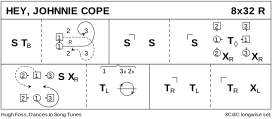
MiniCribs
1-8
1s set, turn 2H, lead down, cross below 3s, cast up to face 1st corners
9-16
1s dance ‘Hello-Goodbye’ setting ending with petronella turn (pas-de-bas) to 2nd places own sides while 2s+3s cross RH (bars 15-16) 17-20 1s cast (1M down/1L up) to meet in centre while 2M+3M and 2L+3L set, change places RH
21-24
1s turn LH while 2s+3s chase 1/2 way round them clockwise. 1s finish facing 1st corners
25-32
1s turn corner, partner, corner and cross LH to 2nd place own sides 2 1 3
E-Cribs
1-8
1c set | turn BH ; lead down (2c up) | cross between 3c and cast up to face 1cnr
9-16
SetH&G{6}| 1c Petronella to 2pl while{2} 2c+3c cross RH (2x,1,3x)
17-24
1c cast 1M down & 1W up and in through the ends, while{4} 2M+3M & 2W+3W set and cross RH on sidelines ; 1c LH turn to face 1cnr while{4} 2c+3c ½ chase clw
25-32
Turn CPCP (2,1,3)

Заметки
Twenty First of September
The Jacobite Rising of 1745 had all of the elements of a Greek drama in Highland dress:
a handsome and valiant hero, loyal companions, sagacious advisers urging caution,
forces of eventually insuperable power set in relentless motion,
a few victories, and inevitable defeat.
On 19 August Prince Charles Edward and his Highland adherents
raised the Jacobite standard at Glenfinnan and began their march east and south,
gathering fighting men to their cause as they went.
They entered Perth on 5 September and then moved on to their goal, Edinburgh.
The capital was secured in a bloodless coup on the night of 16 September
and the next day the prince went to the Mercat Cross in the High Street
and proclaimed his father king.
Then the Jacobite army rested.
General Sir John Cope was also in the Highlands, in pursuit of the Jacobites,
his goal the same as theirs, Edinburgh.
On 4 September he left Inverness to march to Aberdeen
where the Hanoverian army embarked for Dunbar.
Cope arrived there on 17 September, a day too late, for Edinburgh was already in the enemy’s hands.
Two days later the government forces were at Haddington
and on 20 September Cope took up his position near Preston,
on a flat area of bogs and coal pits some eleven miles east of Edinburgh on the shore of the firth.
That same day the Jacobite army left its bivouac at Duddingston and marched toward Prestonpans.
That night both armies lay down in the chosen field of battle to wait an encounter the following day.
During the night, however, it was decided that the prince’s position was unsuitable
and before daylight a local man, a laird’s son named Robert Anderson,
led the Jacobites through the marshland in a flanking movement around Cope’s army
which put them between the Hanoverians and the sea.
At dawn the Jacobites attacked and within ten minutes the battle was over.
In his
Sketches of the Highlanders
General David Stewart of Garth
described the Highlanders’ savage assault.
“They advanced with the utmost rapidity towards the enemy,
gave fire when within a musket length of the object, and threw down their pieces,
then drawing their swords and holding their dirk in their left hand along with their target,
darted with fury on the enemy through the smoke of their fire.”
Sir John Cope trode the north right far,
Yet ne’er a rebel he cam naur,
Until he landed at Dunbar
Right early in a morning.
Hey Johnie Cope are ye wauking yet,
Or are ye sleeping I would wit;
O haste ye get up for the drums do beat,
O fye Cope rise in the morning.
He wrote a challenge from Dunbar,
Come fight me Charlie an ye daur;
If it be not by the chance of war
I’ll give you a merry morning.
Hey Johnie Cope &c.
When Charlie look’d the letter upon
He drew his sword the scabbard from –
“So Heaven restore to me my own,
I’ll meet you, Cope, in the morning.”
Hey Johnie Cope &c.
Cope swore with many a bloody word
That he would fight them gun and sword,
But he fled frae his nest like an ill-scar’d bird,
And Johnie he took wing in the morning.
Hey Johnie Cope &c.
It was upon an afternoon,
Sir Johnie marched to Preston town,
He says, my lads come lean you down,
And we’ll fight the boys in the morning.
Hey Johnie Cope &c.
But when he saw the Highland lads,
Wi’ tartan trews and white cockauds,
Wi’ swords & guns & rungs & gauds,
O Johnie he took wing in the morning.
Hey Johnie Cope &c.
On the morrow when he did rise,
He look’d between him and the skies.
He saw them wi’ their naked thighs,
Which fear’d him in the morning.
Hey Johnie Cope &c.
O then he flew into Dunbar,
Crying for a man of war;
He thought to have pass’d for a rustic tar,
And gotten awa in the morning.
Hey Johnie Cope &c.
Sir Johnie into Berwick rade,
Just as the devil had been his guide;
Gien him the warld he would na stay’d
To foughten the boys in the morning.
Hey Johnie Cope &c.
Says the Berwickers to Sir John,
O what’s become of all your men.
In faith says he, I dinna ken,
I left them a’ this morning.
Hey Johnie Cope &c.
Says Lord Mark Car ye are na blate,
To bring us the news o’ your ain defeat,
I think you deserve the back o’ the gate
Get out o’ my sight this morning.
Hey Johnie Cope &c.
The above verses are taken exactly
from James Johnson’s
The Scots Musical Museum
, Volume 3, 1790.
They were originally published as a song sheet by a Glasgow music-seller named Magowan
and were, according to William Stenhouse,
“interspersed with alterations and additions by Burns.”
There are many versions of “Johnie Cope” and Charles Kirkpatrick Sharpe quoted a “Mr Cunningham”,
either the poet Allan Cunningham or his son Peter, on the subject.
“The variations are numerous: I once heard a peasant boast, among other acquirements,
that he could sing Johnnie Cope with all nineteen variations.”
(See also “Eight Men of Moidart” and “Nineteenth of December”)
From “Scotland Dances”, by Eugenia (Jeannie) Callander Sharp
(Used by permission.)
The Jacobite Rising of 1745 had all of the elements of a Greek drama in Highland dress:
a handsome and valiant hero, loyal companions, sagacious advisers urging caution,
forces of eventually insuperable power set in relentless motion,
a few victories, and inevitable defeat.
On 19 August Prince Charles Edward and his Highland adherents
raised the Jacobite standard at Glenfinnan and began their march east and south,
gathering fighting men to their cause as they went.
They entered Perth on 5 September and then moved on to their goal, Edinburgh.
The capital was secured in a bloodless coup on the night of 16 September
and the next day the prince went to the Mercat Cross in the High Street
and proclaimed his father king.
Then the Jacobite army rested.
General Sir John Cope was also in the Highlands, in pursuit of the Jacobites,
his goal the same as theirs, Edinburgh.
On 4 September he left Inverness to march to Aberdeen
where the Hanoverian army embarked for Dunbar.
Cope arrived there on 17 September, a day too late, for Edinburgh was already in the enemy’s hands.
Two days later the government forces were at Haddington
and on 20 September Cope took up his position near Preston,
on a flat area of bogs and coal pits some eleven miles east of Edinburgh on the shore of the firth.
That same day the Jacobite army left its bivouac at Duddingston and marched toward Prestonpans.
That night both armies lay down in the chosen field of battle to wait an encounter the following day.
During the night, however, it was decided that the prince’s position was unsuitable
and before daylight a local man, a laird’s son named Robert Anderson,
led the Jacobites through the marshland in a flanking movement around Cope’s army
which put them between the Hanoverians and the sea.
At dawn the Jacobites attacked and within ten minutes the battle was over.
In his
Sketches of the Highlanders
General David Stewart of Garth
described the Highlanders’ savage assault.
“They advanced with the utmost rapidity towards the enemy,
gave fire when within a musket length of the object, and threw down their pieces,
then drawing their swords and holding their dirk in their left hand along with their target,
darted with fury on the enemy through the smoke of their fire.”
Sir John Cope trode the north right far,
Yet ne’er a rebel he cam naur,
Until he landed at Dunbar
Right early in a morning.
Hey Johnie Cope are ye wauking yet,
Or are ye sleeping I would wit;
O haste ye get up for the drums do beat,
O fye Cope rise in the morning.
He wrote a challenge from Dunbar,
Come fight me Charlie an ye daur;
If it be not by the chance of war
I’ll give you a merry morning.
Hey Johnie Cope &c.
When Charlie look’d the letter upon
He drew his sword the scabbard from –
“So Heaven restore to me my own,
I’ll meet you, Cope, in the morning.”
Hey Johnie Cope &c.
Cope swore with many a bloody word
That he would fight them gun and sword,
But he fled frae his nest like an ill-scar’d bird,
And Johnie he took wing in the morning.
Hey Johnie Cope &c.
It was upon an afternoon,
Sir Johnie marched to Preston town,
He says, my lads come lean you down,
And we’ll fight the boys in the morning.
Hey Johnie Cope &c.
But when he saw the Highland lads,
Wi’ tartan trews and white cockauds,
Wi’ swords & guns & rungs & gauds,
O Johnie he took wing in the morning.
Hey Johnie Cope &c.
On the morrow when he did rise,
He look’d between him and the skies.
He saw them wi’ their naked thighs,
Which fear’d him in the morning.
Hey Johnie Cope &c.
O then he flew into Dunbar,
Crying for a man of war;
He thought to have pass’d for a rustic tar,
And gotten awa in the morning.
Hey Johnie Cope &c.
Sir Johnie into Berwick rade,
Just as the devil had been his guide;
Gien him the warld he would na stay’d
To foughten the boys in the morning.
Hey Johnie Cope &c.
Says the Berwickers to Sir John,
O what’s become of all your men.
In faith says he, I dinna ken,
I left them a’ this morning.
Hey Johnie Cope &c.
Says Lord Mark Car ye are na blate,
To bring us the news o’ your ain defeat,
I think you deserve the back o’ the gate
Get out o’ my sight this morning.
Hey Johnie Cope &c.
The above verses are taken exactly
from James Johnson’s
The Scots Musical Museum
, Volume 3, 1790.
They were originally published as a song sheet by a Glasgow music-seller named Magowan
and were, according to William Stenhouse,
“interspersed with alterations and additions by Burns.”
There are many versions of “Johnie Cope” and Charles Kirkpatrick Sharpe quoted a “Mr Cunningham”,
either the poet Allan Cunningham or his son Peter, on the subject.
“The variations are numerous: I once heard a peasant boast, among other acquirements,
that he could sing Johnnie Cope with all nineteen variations.”
(See also “Eight Men of Moidart” and “Nineteenth of December”)
From “Scotland Dances”, by Eugenia (Jeannie) Callander Sharp
(Used by permission.)
Видео 1
Demonstration quality