Jenny's Bawbee
Основная информация
| Автор: | Thomas (19C) Wilson |
|---|---|
| RSCDS: |
 RSCDS HQ publication
|
| Сочинен в России: | Нет |
| Публикация: |
|
| Рекомендуемая музыка: | Jenny's Bawbee |
Параметры
| Тип танца: | Strathspey |
|---|---|
| Тип сета: | Longwise set |
| Размер: | 8x24 |
| Формат сета: | 4 couples |
| Танцующие пары: | 2 |
Источник:
https://my.strathspey.org/dd/dance/3236/
MiniCribs
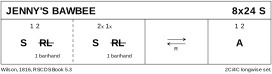
1-8
1s+2s set, dance 1/2 R&L (1 bar per hand), set & dance 1/2 R&L (1 bar per hand) back to places
9-16
1s lead down the middle & back to top
17-24
1s+2s dance Allemande
E-Cribs
1-8
All set, ½ R&L (1 bar per hand) ; repeat
9-16
1c lead down the middle and up (1,2)
17-24
1c+2c Allemande

Заметки
A bawbee was a coin introduced by James V of Scotland and originally valued at six pence Scots (or half an English penny). The name supposedly derives from that of the Master of the Mint at the time, a laird of Sillebawby (which is a farm in the parish of Burntisland, Fife).
Jenny's Bawbee
There’s your plack, and my plack,
And your plack and my plack,
And my plack and your plack,
And Jenny’s bawbie.
Chorus
And a’ that e’er my Jenny had,
My Jenny had, my Jenny had,
And a’ that e’er my Jenny had,
Was ae bawbie.
We’ll put it a’ in the pint-stoup,
The pint-stoup, the pint-stoup,
We’ll put it a’ in the pint-stoup,
And birl’t a’ three.
This old, anonymous song comes from David Herd’s
Ancient and Modern Scottish Songs
published in 1776.
The air was long a favourite dance tune.
Sir Alexander Boswell of Auchinleck (1775–1822), son of James Boswell,
tried his hand at writing new verses to the old tune.
I met four chaps yon birks amang,
Wi’ hinging lugs and faces lang;
I speer’d at neebour Bauldy Strang,
Wha’s they I see?
Quo’ he, ilk cream-fac’d pawky chiel
Thought he was cunning as the deil,
And here they cam awa to steal
Jenny’s bawbee.
The first, a captain to his trade,
Wi’ skull ill-lin’d, but back weel clad,
March’d round the barn and by the shed,
And pap’d on his knee;
Quo’ he, “My goddess, nymph and queen,
Your beauty’s dazzled baith my een!”
But deil a beauty had he seen
But Jenny’s bawbee.
A lawyer neist, wi’ bletherin’ gab,
Wha speeches wove like ony wab,
In ilk ane’s corn aye took a dab,
And a’ for a fee.
Accounts he ow’d through a’ the toun,
And tradesmen’s tongues nae mair could drown,
But now he thoucht to clout his gown
Wi’ Jenny’s bawbee.
A Norland Laird neist trotted up,
Wi’ bawsand naig and siller whup,
Cried “There’s my beast, lad, hauld the grup,
Or tie’t till a tree;
What’s gowd to me? – I’ve waith o’ lan’!
Bestow on ane o ‘worth your han’!” –
He thocht to pay what he was
awn
Wi’ Jenny’s bawbee.
Drest up just like the knave o’ clubs,
A THING came neist, (but life has rubs)
Foul were the roads, and fu’ the dubs,
And jaupit a’ was he.
He danc’d up, squinting thro’ a glass
And grinn’d, “I’ faith a bonnie lad!”
He thought to win, wi front o’ brass,
Jenny’s bawbee.
She bade the Laird gae kame his wig,
The Sodger no to strut sae big,
The Lawyer no to be a prig,
The fool, he cried, “Tehee!
I kenn’d that I could never fail!”
But she preen’d the dishclout to his tail,
And soused him wi’ the water-pail,
And kept her bawbee.
An additional verse was added by Allan Cunningham (1784–1842).
Then Johnnie cam’, a lad o’ sense,
Although he had na mony pence;
And took young Jenny to the spence,
Wi’ her to crack a wee.
Now Johnnie was a clever chiel,
And here his suit he pressed sae weel,
That Jenny’s heart grew saft as jeel,
And she birled her bawbee.
From “Scotland Dances”, by Eugenia (Jeannie) Callander Sharp
(Used by permission.)
Jenny's Bawbee
There’s your plack, and my plack,
And your plack and my plack,
And my plack and your plack,
And Jenny’s bawbie.
Chorus
And a’ that e’er my Jenny had,
My Jenny had, my Jenny had,
And a’ that e’er my Jenny had,
Was ae bawbie.
We’ll put it a’ in the pint-stoup,
The pint-stoup, the pint-stoup,
We’ll put it a’ in the pint-stoup,
And birl’t a’ three.
This old, anonymous song comes from David Herd’s
Ancient and Modern Scottish Songs
published in 1776.
The air was long a favourite dance tune.
Sir Alexander Boswell of Auchinleck (1775–1822), son of James Boswell,
tried his hand at writing new verses to the old tune.
I met four chaps yon birks amang,
Wi’ hinging lugs and faces lang;
I speer’d at neebour Bauldy Strang,
Wha’s they I see?
Quo’ he, ilk cream-fac’d pawky chiel
Thought he was cunning as the deil,
And here they cam awa to steal
Jenny’s bawbee.
The first, a captain to his trade,
Wi’ skull ill-lin’d, but back weel clad,
March’d round the barn and by the shed,
And pap’d on his knee;
Quo’ he, “My goddess, nymph and queen,
Your beauty’s dazzled baith my een!”
But deil a beauty had he seen
But Jenny’s bawbee.
A lawyer neist, wi’ bletherin’ gab,
Wha speeches wove like ony wab,
In ilk ane’s corn aye took a dab,
And a’ for a fee.
Accounts he ow’d through a’ the toun,
And tradesmen’s tongues nae mair could drown,
But now he thoucht to clout his gown
Wi’ Jenny’s bawbee.
A Norland Laird neist trotted up,
Wi’ bawsand naig and siller whup,
Cried “There’s my beast, lad, hauld the grup,
Or tie’t till a tree;
What’s gowd to me? – I’ve waith o’ lan’!
Bestow on ane o ‘worth your han’!” –
He thocht to pay what he was
awn
Wi’ Jenny’s bawbee.
Drest up just like the knave o’ clubs,
A THING came neist, (but life has rubs)
Foul were the roads, and fu’ the dubs,
And jaupit a’ was he.
He danc’d up, squinting thro’ a glass
And grinn’d, “I’ faith a bonnie lad!”
He thought to win, wi front o’ brass,
Jenny’s bawbee.
She bade the Laird gae kame his wig,
The Sodger no to strut sae big,
The Lawyer no to be a prig,
The fool, he cried, “Tehee!
I kenn’d that I could never fail!”
But she preen’d the dishclout to his tail,
And soused him wi’ the water-pail,
And kept her bawbee.
An additional verse was added by Allan Cunningham (1784–1842).
Then Johnnie cam’, a lad o’ sense,
Although he had na mony pence;
And took young Jenny to the spence,
Wi’ her to crack a wee.
Now Johnnie was a clever chiel,
And here his suit he pressed sae weel,
That Jenny’s heart grew saft as jeel,
And she birled her bawbee.
From “Scotland Dances”, by Eugenia (Jeannie) Callander Sharp
(Used by permission.)
Видео 1
Demonstration quality

Видео 2
Demonstration quality
Видео 3
Demonstration quality