Leap Year
Основная информация
| Автор: | Unknown |
|---|---|
| RSCDS: |
 RSCDS HQ publication
|
| Сочинен в России: | Нет |
| Публикация: |
|
| Рекомендуемая музыка: | Leap Year |
Параметры
| Тип танца: | Jig |
|---|---|
| Тип сета: | Longwise set |
| Размер: | 8x24 |
| Формат сета: | 4 couples |
| Танцующие пары: | 2 |
Источник:
https://my.strathspey.org/dd/dance/3763/
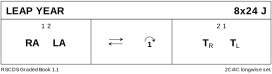
MiniCribs
1-8
1s+2s dance RH across & LH back to places
9-16
1s lead down for 3 steps, back to top & cast to 2nd places on own sides
17-24
2s & 1s turn partner RH, turn partner LH
E-Cribs
1-8
1c+2c RHA ; LHA
9-16
1c lead down {3} and up {3} | cast off to 2pl (2c up)
17-24
2c+1c turn RH to places ; repeat LH.

Заметки
Leap Year
The old tradition of Leap Year has an interesting basis in fact
and throws a spotlight on a short period of Scottish history
that, had events gone as planned, would have changed radically
the whole course of events for many centuries.
In 1288, that year being Leap Year, the estates of Scotland enacted a law that stated
“it is statut and ordaint that during the rein of hir maist blissit Megeste,
for ilk years knowne as lepe years,
ilk mayden ladye of bothe highe and lowe estait shall has liberte to bespeke ye man she likes,
alebeit he refuses to taik hir to be his lawful wyfe,
she shall be mulcted in ye sum ane pundis or less, as his estait may be;
except and awis gif he can make it appeare that he is betrothit ane ither woman he then shall be free.”
“Hir maist blissit Mageste” was five year old Margaret, the “Maid of Norway”, (1283–1290).
Alexander III (1241–1285) married Margaret (1240–1275), daughter of Henry III of England.
They had three children and their daughter, Margaret, was married to Eric II of Norway,
grandson of King Haakon whom Alexander had defeated at the battle of Largs in 1263.
The Treaty of Perth of 1266, negotiated by Alexander and Haakon’s son, Magnus,
ceded back to Scotland all of the Hebrides,
with only Orkney and Shetland remaining in the possession of Norway.
The marriage in 1282 of Margaret of Scotland and Eric Magnusson, later Eric II,
cemented the new diplomatic relations between Scotland and Norway.
Margaret died soon after the birth of her daughter, Margaret,
and in 1293, Eric married, again to a Scot, Isabella Bruce, sister of Robert Bruce.
Alexander’s queen, Margaret of England, and their three children predeceased him
and in 1285 he married the French Yolande de Dreux.
The question of succession was of extreme importance.
In 1284, before his re-marriage, Alexander had obtained an agreement from the Estates
that if he died childless the Crown would pass to his granddaughter, the Maid of Norway,
then only an infant.
On the stormy night of 16 March, 1285, Alexander attended a banquet at his castle in Edinburgh
and, driven by drink and desire for his new queen, then at the royal castle of Kinghorn,
he crossed the rough Firth of Forth and rode recklessly along the Fife coast.
He had reached Pettycur, a promontory jutting out into the firth not far from Kinghorn,
when his horse slipped, carrying Alexander to his death, over the cliff.
Quhen Alexander our kynge was dede,
That Scotlande lede in lauche and le,
Away was sons of alle and brede,
Off wyne and wax, of gamyn and gle.
Our golde was changit in to lede,
Crist, borne in virgynyte,
Succours Scotlande, and ramede,
That is stade in perplexite.
– Anonymous, 14th century
Young Margaret was Queen of Scotland.
Edward I (1239–1307), brother of Margaret of England,
saw a golden opportunity to add long-coveted Scotland to his royal possessions.
He would marry his young son and heir, Prince Edward (1284–1327),
to his sister Margaret’s granddaughter.
Even before he broached the subject to the guardians of the Scottish queen,
wily Edward took the precaution of applying to Pope Nicholas IV
for a dispensation for the marriage,
the relationship between the five and six year old children being somewhat complicated.
An agreement between Edward and the Scots was finally reached
that Margaret would come at once to either England or Scotland
and in July of 1290 the betrothal contract was concluded
with the infamous Treaty of Birgham-on-Tweed.
Edward, an implacable enemy who gave no quarter,
provided a document to be signed by the queen’s guardians that was a masterpiece of guile.
While on the surface it would appear that Scotland would retain her independence,
the Scots failed to recognise the meaning of a caveat that stated
that the crown of Scotland would pass to the next legitimate
Scottish
successor
only
if Margaret
or
Prince Edward failed to have an heir.
This meant, quite simply, that should Prince Edward have an heir by
another
wife, after Margaret,
Scotland would still be his by right of personal possession.
The guardians signed and Edward felt that Scotland was his, one way or another.
Queen Margaret, by then a child of seven, sailed from Norway in September, 1290,
but she never reached Scotland.
Driven by stormy seas to land, the young queen died under mysterious circumstances in Orkney.
Undeterred by this minor set-back, Edward vigorously pressed his suit as Lord Paramount of Scotland
and it was only a matter of time
before the beginning of the interminable War of Scottish Independence.
(See “The Auld Alliance”)
It is interesting to imagine the fate of Scotland had the Maid of Norway,
in whose honour the Scottish Leap Year law was passed,
lived to marry the future Edward II.
From “Scotland Dances”, by Eugenia (Jeannie) Callander Sharp
(Used by permission.)
The old tradition of Leap Year has an interesting basis in fact
and throws a spotlight on a short period of Scottish history
that, had events gone as planned, would have changed radically
the whole course of events for many centuries.
In 1288, that year being Leap Year, the estates of Scotland enacted a law that stated
“it is statut and ordaint that during the rein of hir maist blissit Megeste,
for ilk years knowne as lepe years,
ilk mayden ladye of bothe highe and lowe estait shall has liberte to bespeke ye man she likes,
alebeit he refuses to taik hir to be his lawful wyfe,
she shall be mulcted in ye sum ane pundis or less, as his estait may be;
except and awis gif he can make it appeare that he is betrothit ane ither woman he then shall be free.”
“Hir maist blissit Mageste” was five year old Margaret, the “Maid of Norway”, (1283–1290).
Alexander III (1241–1285) married Margaret (1240–1275), daughter of Henry III of England.
They had three children and their daughter, Margaret, was married to Eric II of Norway,
grandson of King Haakon whom Alexander had defeated at the battle of Largs in 1263.
The Treaty of Perth of 1266, negotiated by Alexander and Haakon’s son, Magnus,
ceded back to Scotland all of the Hebrides,
with only Orkney and Shetland remaining in the possession of Norway.
The marriage in 1282 of Margaret of Scotland and Eric Magnusson, later Eric II,
cemented the new diplomatic relations between Scotland and Norway.
Margaret died soon after the birth of her daughter, Margaret,
and in 1293, Eric married, again to a Scot, Isabella Bruce, sister of Robert Bruce.
Alexander’s queen, Margaret of England, and their three children predeceased him
and in 1285 he married the French Yolande de Dreux.
The question of succession was of extreme importance.
In 1284, before his re-marriage, Alexander had obtained an agreement from the Estates
that if he died childless the Crown would pass to his granddaughter, the Maid of Norway,
then only an infant.
On the stormy night of 16 March, 1285, Alexander attended a banquet at his castle in Edinburgh
and, driven by drink and desire for his new queen, then at the royal castle of Kinghorn,
he crossed the rough Firth of Forth and rode recklessly along the Fife coast.
He had reached Pettycur, a promontory jutting out into the firth not far from Kinghorn,
when his horse slipped, carrying Alexander to his death, over the cliff.
Quhen Alexander our kynge was dede,
That Scotlande lede in lauche and le,
Away was sons of alle and brede,
Off wyne and wax, of gamyn and gle.
Our golde was changit in to lede,
Crist, borne in virgynyte,
Succours Scotlande, and ramede,
That is stade in perplexite.
– Anonymous, 14th century
Young Margaret was Queen of Scotland.
Edward I (1239–1307), brother of Margaret of England,
saw a golden opportunity to add long-coveted Scotland to his royal possessions.
He would marry his young son and heir, Prince Edward (1284–1327),
to his sister Margaret’s granddaughter.
Even before he broached the subject to the guardians of the Scottish queen,
wily Edward took the precaution of applying to Pope Nicholas IV
for a dispensation for the marriage,
the relationship between the five and six year old children being somewhat complicated.
An agreement between Edward and the Scots was finally reached
that Margaret would come at once to either England or Scotland
and in July of 1290 the betrothal contract was concluded
with the infamous Treaty of Birgham-on-Tweed.
Edward, an implacable enemy who gave no quarter,
provided a document to be signed by the queen’s guardians that was a masterpiece of guile.
While on the surface it would appear that Scotland would retain her independence,
the Scots failed to recognise the meaning of a caveat that stated
that the crown of Scotland would pass to the next legitimate
Scottish
successor
only
if Margaret
or
Prince Edward failed to have an heir.
This meant, quite simply, that should Prince Edward have an heir by
another
wife, after Margaret,
Scotland would still be his by right of personal possession.
The guardians signed and Edward felt that Scotland was his, one way or another.
Queen Margaret, by then a child of seven, sailed from Norway in September, 1290,
but she never reached Scotland.
Driven by stormy seas to land, the young queen died under mysterious circumstances in Orkney.
Undeterred by this minor set-back, Edward vigorously pressed his suit as Lord Paramount of Scotland
and it was only a matter of time
before the beginning of the interminable War of Scottish Independence.
(See “The Auld Alliance”)
It is interesting to imagine the fate of Scotland had the Maid of Norway,
in whose honour the Scottish Leap Year law was passed,
lived to marry the future Edward II.
From “Scotland Dances”, by Eugenia (Jeannie) Callander Sharp
(Used by permission.)
Видео 1
Good

Видео 2
Good
Видео 3
Good