Maxwell's Rant
Основная информация
| Автор: | David Rutherford |
|---|---|
| RSCDS: |
 RSCDS HQ publication
|
| Сочинен в России: | Нет |
| Публикация: |
|
| Рекомендуемая музыка: |
|
Параметры
| Тип танца: | Reel |
|---|---|
| Тип сета: | Longwise set |
| Размер: | 8x32 |
| Формат сета: | 4 couples |
| Танцующие пары: | 3 |
Источник:
https://my.strathspey.org/dd/dance/4239/
MiniCribs
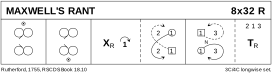
1-8
1s cross down to dance reflection reels of 3 on opposite sides
9-16
1s cross down to dance reflection reels of 3 on own sides
17-24
1s cross RH, cast to 2nd place & dance 1/2 Fig of 8 round 2s
25-32
1s dance down between the 3s, cast up to 2nd place & 2s+1s+3s turn partners RH
E-Cribs
1-8
Mirror Reels3 on the sidelines (1c cross down) (1x,2,3)
9-16
1c cross back into mirror Reels3 on own sides
17-24
1c cross RH | cast (2c up) ; ½ Fig8 round 2c
25-32
1c dance down between 3c and cast up to 2pl ; 2c+1c+3c turn RH

Заметки
##>>
The Society’s version of this dance can be traced to Rutherford’s first collection of about 1755 where it is given as
Maxwill’s Rant
.
The Maxwells, in common with many of the great Border families, regularly changed allegiance between English and Scottish monarchs as best suited the family interest. For example, Sir Eustace Maxwell held Caerlaverock Castle, the family seat, for Edward I in 1312 but by 1320 was one of the signatories of the Declaration of Arbroath as a supporter of Robert the Bruce although five months later he was accused, and cleared, of involvement in an attempted assassination of The Bruce.
##<<
Maxwell's Rant
The Maxwells were a most prolific family.
A dozen or so cadet branches of the house of Maxwell are scattered about the Lowlands
from the Borders to Renfrewshire and the Clyde.
Their castles and keeps were many, the most important the now ruined but still awesome Caerlaverock.
Caerlaverock in Dumfries-shire was a Maxwell stronghold
from the time of the13th century John de Maccuswell.
The great triangular castle – the “Lark’s Nest” – was besieged, captured and recaptured many times
when the English were battering the Border during the war of Scottish independence,
and the castle was finally dismantled by the covenanting army in 1640
after a siege that lasted for three months.
The Maxwells grew to early power when they were made Wardens of the West March,
but before that though they were political forces to be reckoned with.
Maccus’ grandson, Sir John (d. 1241) was royal chamberlain
and his brother, Sir Aymer, was Justiciar of Galloway.
Sir Herbert of Maxwell recognised Margaret of Norway as Queen of Scotland
after the death of Alexander III in 1286
and was a supporter of John Balliol after the child queen’s death.
(See “The Auld Alliance”)
Sir Eustace (d. 1342) swayed wildly in the strong political winds.
He held Caerlaverock for Edward I of England in 1312,
but dismantled the castle’s fortifications with the rise of Robert Bruce.
A signator of the Declaration of Arbroath,
that warning to Pope John XXII that the Scots would have no other king but Robert,
Sir Eustace later favoured Edward Balliol for a time,
but then swung back to full support of the Bruce line in David II.
His brother, Sir John, fought with David II at the battle of Neville’s Cross
where he was captured and sent to the Tower of London where he died.
Sir Herbert Maxwell was knighted when James I returned from English captivity in 1424
and was a Lord of Parliament during the reign of James II.
John, 4th Lord Maxwell, imprisoned by James for his lawless activities on the Borders,
died ad Flodden in 1513.
The fifth Lord Maxwell, Robert (d. 1546), a member of the Royal Council, Great Admiral of Scotland,
escorted Mary of Lorraine to Scotland in 1538, was captured at Solway Moss in 1542
and released only after he promised to aid Henry VIII in his Scottish aspirations,
a promise which he did not keep.
It was in the latter half of the 16th century,
with the Wardenship of the West March the chief bone of contention,
that the Maxwells became involved in a feud with the Johnstones,
a feud which resulted in the death of the Laird of Johnstone in 1608
at the hands of John, 9th Lord Maxwell, who fled to France, returned to Scotland
and was beheaded in 1613.
The wind was fair, and the ship was clare,
And the good Lord went away;
The most part of his friends was there,
Giving him a fair convoy.
They drank the wine, they did not spare,
Presentting in that good Lord’s sight;
Now he is on the floods so gray;
Lord Maxwell has te’n his last good-night.
The executed Lord Maxwell’s brother, Robert, succeeded
and in 1620 was created Earl of Nithsdale by Charles I.
William, 5th Earl of Nithsdale, was an ardent Jacobite.
He was captured at the battle of Preston in 1715, tried and sentenced to a traitor’s death.
The ingenious and brave Lady Nithsdale, however,
rescued her husband from the Tower of London
by dressing him in women’s clothing just before his execution
and together they escaped to the court in Rome of the Old Pretender, James Edward Stuart,
where Nithsdale, his title forfeit, died in 1744.
From “Scotland Dances”, by Eugenia (Jeannie) Callander Sharp
(Used by permission.)
The Society’s version of this dance can be traced to Rutherford’s first collection of about 1755 where it is given as
Maxwill’s Rant
.
The Maxwells, in common with many of the great Border families, regularly changed allegiance between English and Scottish monarchs as best suited the family interest. For example, Sir Eustace Maxwell held Caerlaverock Castle, the family seat, for Edward I in 1312 but by 1320 was one of the signatories of the Declaration of Arbroath as a supporter of Robert the Bruce although five months later he was accused, and cleared, of involvement in an attempted assassination of The Bruce.
##<<
Maxwell's Rant
The Maxwells were a most prolific family.
A dozen or so cadet branches of the house of Maxwell are scattered about the Lowlands
from the Borders to Renfrewshire and the Clyde.
Their castles and keeps were many, the most important the now ruined but still awesome Caerlaverock.
Caerlaverock in Dumfries-shire was a Maxwell stronghold
from the time of the13th century John de Maccuswell.
The great triangular castle – the “Lark’s Nest” – was besieged, captured and recaptured many times
when the English were battering the Border during the war of Scottish independence,
and the castle was finally dismantled by the covenanting army in 1640
after a siege that lasted for three months.
The Maxwells grew to early power when they were made Wardens of the West March,
but before that though they were political forces to be reckoned with.
Maccus’ grandson, Sir John (d. 1241) was royal chamberlain
and his brother, Sir Aymer, was Justiciar of Galloway.
Sir Herbert of Maxwell recognised Margaret of Norway as Queen of Scotland
after the death of Alexander III in 1286
and was a supporter of John Balliol after the child queen’s death.
(See “The Auld Alliance”)
Sir Eustace (d. 1342) swayed wildly in the strong political winds.
He held Caerlaverock for Edward I of England in 1312,
but dismantled the castle’s fortifications with the rise of Robert Bruce.
A signator of the Declaration of Arbroath,
that warning to Pope John XXII that the Scots would have no other king but Robert,
Sir Eustace later favoured Edward Balliol for a time,
but then swung back to full support of the Bruce line in David II.
His brother, Sir John, fought with David II at the battle of Neville’s Cross
where he was captured and sent to the Tower of London where he died.
Sir Herbert Maxwell was knighted when James I returned from English captivity in 1424
and was a Lord of Parliament during the reign of James II.
John, 4th Lord Maxwell, imprisoned by James for his lawless activities on the Borders,
died ad Flodden in 1513.
The fifth Lord Maxwell, Robert (d. 1546), a member of the Royal Council, Great Admiral of Scotland,
escorted Mary of Lorraine to Scotland in 1538, was captured at Solway Moss in 1542
and released only after he promised to aid Henry VIII in his Scottish aspirations,
a promise which he did not keep.
It was in the latter half of the 16th century,
with the Wardenship of the West March the chief bone of contention,
that the Maxwells became involved in a feud with the Johnstones,
a feud which resulted in the death of the Laird of Johnstone in 1608
at the hands of John, 9th Lord Maxwell, who fled to France, returned to Scotland
and was beheaded in 1613.
The wind was fair, and the ship was clare,
And the good Lord went away;
The most part of his friends was there,
Giving him a fair convoy.
They drank the wine, they did not spare,
Presentting in that good Lord’s sight;
Now he is on the floods so gray;
Lord Maxwell has te’n his last good-night.
The executed Lord Maxwell’s brother, Robert, succeeded
and in 1620 was created Earl of Nithsdale by Charles I.
William, 5th Earl of Nithsdale, was an ardent Jacobite.
He was captured at the battle of Preston in 1715, tried and sentenced to a traitor’s death.
The ingenious and brave Lady Nithsdale, however,
rescued her husband from the Tower of London
by dressing him in women’s clothing just before his execution
and together they escaped to the court in Rome of the Old Pretender, James Edward Stuart,
where Nithsdale, his title forfeit, died in 1744.
From “Scotland Dances”, by Eugenia (Jeannie) Callander Sharp
(Used by permission.)
Видео 1
Demonstration quality

Видео 2
Demonstration quality
Видео 3
Good
Видео 4
Good
Видео 5
Good
Видео 6
Good
Видео 7
Social
Видео 8
Social
Видео 9
Social
Видео 10
Social
Видео 11
Animation