My only Jo and Dearie, O
Основная информация
| Автор: | Thomas (19C) Wilson |
|---|---|
| RSCDS: |
 RSCDS HQ publication
|
| Сочинен в России: | Нет |
| Публикация: |
|
| Рекомендуемая музыка: |
|
Параметры
| Тип танца: | Strathspey |
|---|---|
| Тип сета: | Longwise set |
| Размер: | 8x32 |
| Формат сета: | 4 couples |
| Танцующие пары: | 3 |
Источник:
https://my.strathspey.org/dd/dance/4865/
MiniCribs
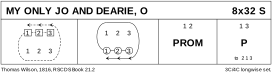
1-8
1L followed by 2L+3L dance across, cast down behind Men & dance up own side to places
9-16
Men repeat above Fig (Bars 1- 8)
17-24
1s+2s Promenade
25-32
1s+3s dance Diamond Poussette 1s ending in 2nd place (2s step up 25-26)
E-Cribs
1-8
1W+2W+3W dance cclw round the men, 1W leading
9-16
1M+2M+3M repeat clw, on [16] 1c+2c dance in for
17-24
1c+2c Promenade (1,2,3)
25-32
1c+3c Poussette (2c up on bars 1-2)

Заметки
My Only Jo And Dearie, O
Thy cheek is o’ the rose’s hue,
My only jo an’ dearie, O;
Thy neck is like the siller dew
Upon the banks sae briery, O;
Thy teeth are o’ the ivory,
O, sweet’s the twinkle o’ thine e’e!
Nae joy, nae pleasure blinks on me,
My only jo an’ dearie, O.
The birdie sings upon the thorn,
It’s sang o’ joy, fu’ cheerie, O,
Rejoicing in the simmer morn,
Nae care to make it eerie, O;
But little kens the sangster sweet,
Ought o’ the care I ha’e to meet,
That gars my restless bosom beat,
My only jo an’ dearie, O.
When we were bairnies on yon brae,
An’ youth was binking bonny, O,
Aft we wad daff the lee lang day,
Our joys fu’ sweet an’ mony, O;
Aft I wad chase thee o’er the lea,
An’ round about the thorny tree;
Or pu’ the wild flowers a’ for thee,
My only jo an’ dearie, O.
I ha’e a wish I canna tine,
‘Mang a’ the cares that grieve me, O;
I wish that thou wert ever mine,
An’ never mair to leave me, O;
Then I wad dawt thee night an’ day.
Nae ither warldly care wad ha’e,
Till life’s warm stream forgat to play,
My only jo an’ dearie, O.
Richard Gall (1776–1801), the author of this song, was born in Linkhouse near Dunbar.
Apprenticed first to a carpenter at the age of eleven,
then to a builder and later to an Edinburgh printer,
he wrote verses in his spare time.
Gall showed great promise as a vernacular poet,
but unfortunately he died in his twenty-fifth year.
Nine of his songs are preserved in James Johnson’s
The Scots Musical Museum
,
among them “My Only Jo An’ Dearie, O” with the title “Thy Cheek Is O’ The Rose’s Hue”.
William Stenhouse wrote:
“This beautiful song, which is another of the productions of the late Mr Richard Gall,
was written at the earnest request of Mr Thomas Oliver, Printer and Publisher, Edinburgh,
an intimate acquaintance of the author’s.
Mr Oliver heard it sung in the Pantomime of Harlequin Highlander, at the Circus,
and was so struck with the melody, that it dwelt upon his mind;
but the only part of the words he recollected were,
My love’s the sweetest creature,
That ever trode the dewy green;
Her cheeks they are like roses,
Wi’ the op’ning gowan wet between –
And having no way of procuring the verses he had heard,
he requested Mr Gall to write words to his favourite tune.
Our young bard promised to do so;
and in a few days presented him with this elegant song,
in which the title of the tune is happily introduced at the close of every stanza.”
From “Scotland Dances”, by Eugenia (Jeannie) Callander Sharp
(Used by permission.)
Thy cheek is o’ the rose’s hue,
My only jo an’ dearie, O;
Thy neck is like the siller dew
Upon the banks sae briery, O;
Thy teeth are o’ the ivory,
O, sweet’s the twinkle o’ thine e’e!
Nae joy, nae pleasure blinks on me,
My only jo an’ dearie, O.
The birdie sings upon the thorn,
It’s sang o’ joy, fu’ cheerie, O,
Rejoicing in the simmer morn,
Nae care to make it eerie, O;
But little kens the sangster sweet,
Ought o’ the care I ha’e to meet,
That gars my restless bosom beat,
My only jo an’ dearie, O.
When we were bairnies on yon brae,
An’ youth was binking bonny, O,
Aft we wad daff the lee lang day,
Our joys fu’ sweet an’ mony, O;
Aft I wad chase thee o’er the lea,
An’ round about the thorny tree;
Or pu’ the wild flowers a’ for thee,
My only jo an’ dearie, O.
I ha’e a wish I canna tine,
‘Mang a’ the cares that grieve me, O;
I wish that thou wert ever mine,
An’ never mair to leave me, O;
Then I wad dawt thee night an’ day.
Nae ither warldly care wad ha’e,
Till life’s warm stream forgat to play,
My only jo an’ dearie, O.
Richard Gall (1776–1801), the author of this song, was born in Linkhouse near Dunbar.
Apprenticed first to a carpenter at the age of eleven,
then to a builder and later to an Edinburgh printer,
he wrote verses in his spare time.
Gall showed great promise as a vernacular poet,
but unfortunately he died in his twenty-fifth year.
Nine of his songs are preserved in James Johnson’s
The Scots Musical Museum
,
among them “My Only Jo An’ Dearie, O” with the title “Thy Cheek Is O’ The Rose’s Hue”.
William Stenhouse wrote:
“This beautiful song, which is another of the productions of the late Mr Richard Gall,
was written at the earnest request of Mr Thomas Oliver, Printer and Publisher, Edinburgh,
an intimate acquaintance of the author’s.
Mr Oliver heard it sung in the Pantomime of Harlequin Highlander, at the Circus,
and was so struck with the melody, that it dwelt upon his mind;
but the only part of the words he recollected were,
My love’s the sweetest creature,
That ever trode the dewy green;
Her cheeks they are like roses,
Wi’ the op’ning gowan wet between –
And having no way of procuring the verses he had heard,
he requested Mr Gall to write words to his favourite tune.
Our young bard promised to do so;
and in a few days presented him with this elegant song,
in which the title of the tune is happily introduced at the close of every stanza.”
From “Scotland Dances”, by Eugenia (Jeannie) Callander Sharp
(Used by permission.)
Видео 1
Demonstration quality