Nineteenth of December
Основная информация
| Автор: | Unknown |
|---|---|
| RSCDS: |
 RSCDS HQ publication
|
| Сочинен в России: | Нет |
| Публикация: |
|
| Рекомендуемая музыка: |
|
Параметры
| Тип танца: | Jig |
|---|---|
| Тип сета: | Longwise set |
| Размер: | 8x32 |
| Формат сета: | 4 couples |
| Танцующие пары: | 2 |
Источник:
https://my.strathspey.org/dd/dance/4959/
MiniCribs
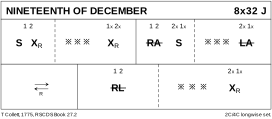
1-8
1s+2s set, cross RH, clap 3 times & cross RH back to places
9-16
1s+2s dance RH across 1/2 way, set, clap 3 times & dance LH across 1/2 way
17-24
1s lead down & back to top
25-32
1s+2s dance 1/2 R&L, clap 3 times & cross RH to own sides
E-Cribs
1-8
1c+2c set and cross RH ; all clap 3 times, 1c+2c cross back RH
9-16
1c+2c ½ RHA, set ; all clap 3 times, 1c+2c ½ LHA back to places
17-24
1c lead down the middle and up
25-32
1c+2c ½ R&L, clap 3 times ; 1c+2c cross back RH to own sides.

Заметки
Nineteenth of December is believed to refer to the last day that the Jacobite Army, led by Bonnie Prince Charlie in 1745, spent on English soil (reluctantly deferring to his advisors).
Nineteenth of December
The title of this dance has been another mystery to modern dancers.
“Nineteenth of December”, like the other puzzle, “General Stuart’s Reel” (cf.),
come from collections dated 1754 and 1749 respectively
and may, therefore, reasonably be assumed to be Jacobite.
Before considering “Nineteenth of December”,
there is one point which ought to be brought up,
a point which can lead historians momentarily astray when dealing with this period.
This is the problem of dates of events, whether they are calculated “Old Style” or “New Style”.
In 1750 there was enacted in Great Britain the Calendar (New Style) Act
which decreed that the day following 2 September, 1752, would become 14 September,
a difference of eleven days.
This is the reason why the birthday of Prince Charles Edward in 1720
is given as 20 December (Old Style) by some historians
and 31 December (New Style) by others.
High flown with the defeat of the Hanoverian army under Sir John Cope at Prestonpans
on 21 September, 1745,
the prince and his Highland clans rested and celebrated at Edinburgh for six weeks and, then,
at the beginning of November began to march south into England.
On 8 November the Jacobite army crossed the Esk River
and a week later the English city of Carlisle surrendered.
The victorious Highlanders then marched further south
and on 3rd December arrived in Derby, only one hundred and thirty miles from London.
On 6 December, known as “Black Friday”, as couriers arrived from Derby,
London shopkeepers bolted their doors, prayers for protection were offered up in churches,
the Bank of England was besieged by depositors wanting to withdraw their money,
and plans were made for the escape of George II to Hanover.
London was in a state of panic.
Ironically, this was the same day that Prince Charles Edward,
forced against his will to accede to the arguments of his Council
that there was no hope of a supportive rising by the English Jacobites
and that Louis XV was not going to send an invading army,
began his retreat from Derby.
After nearly having been caught in a pincers at Wigan
by the armies of General George Wade from the east
and William, Duke of Cumberland, coming from the south,
and a skirmish at Penrith,
the prince withdrew successfully to Carlisle with was reached on 19 December.
Leaving Carlisle garrisoned with only four hundred men
and bolstered with nearly all of the artillery,
the Jacobite army marched toward the border.
When they reached the Esk River, some four miles from the Border,
the Highlanders found it in flood.
Some five thousand of them struggled into the icy water and many narrowly escaped drowning.
Safely on the far side the cold and sodden soldiers built bonfires to dry their clothes
and while the bagpipes played they danced to warm themselves.
The Jacobite army had returned home.
It was 20 December, the birthday of Prince Charles Edward.
It is possible that “Nineteenth of December”,
a dance that features formations of crossing and recrossing
with clapping of hands on two bars in three of the four figures,
represents the triumphant crossing of the Border, the march to Derby and the retreat from England,
the only formation that does not include clapping,
the safe arrival back in Carlisle and the re-crossing of the Esk into Scotland.
Still within the realm of supposition one more theory must be advanced
in regard to both “General Stuart’s Reel” and “Nineteenth of December”.
After the defeat of Prince Charles Edward and the Jacobite army at Culloden on 16 Apri, 1746,
the Disarming Act, originally passed after the Rising of 1715, was renewed.
On this occasion, however, more stringent restrictions were placed upon the Scots.
The wearing of the kilt or, indeed, tartan in any form was prohibited
and the act forbade the playing of the bagpipes.
But nowhere did the act state that the fiddle and its music were outlawed
and that the defeated Jacobites could not dance were they so inclined.
Thus we have preserved for us today many dances devised during or just after the Rising of 1745
that bear Jacobite titles.
Between the two risings the Scottish Jacobites kept their hopes alive
and stayed free of arrest by subterfuge and the lavish use of codes.
There were especially designed glasses
for toasting both Prince James Francis Edward Stuart, the Jacobite James VIII (III),
the “king over the water”, and his son, Prince Charles Edward.
Carefully coded incantations and toasts carried more implication than appeared on the surface.
Pictures and mirrors were contrived that could be turned in a c ertain direction
and a portrait of one or the other of the “Pretenders” wavered into sight.
Euphemism was a Jacobite habit for thirty years
and it may be that “General Stuart” was actually Prince Charles Edward
and that “Nineteenth of December” celebrates the eve of his birthday.
From this distance in time all possibilities must be considered, all clues analysed,
and even then the mysteries may remain unsolved.
From “Scotland Dances”, by Eugenia (Jeannie) Callander Sharp
(Used by permission.)
Nineteenth of December
The title of this dance has been another mystery to modern dancers.
“Nineteenth of December”, like the other puzzle, “General Stuart’s Reel” (cf.),
come from collections dated 1754 and 1749 respectively
and may, therefore, reasonably be assumed to be Jacobite.
Before considering “Nineteenth of December”,
there is one point which ought to be brought up,
a point which can lead historians momentarily astray when dealing with this period.
This is the problem of dates of events, whether they are calculated “Old Style” or “New Style”.
In 1750 there was enacted in Great Britain the Calendar (New Style) Act
which decreed that the day following 2 September, 1752, would become 14 September,
a difference of eleven days.
This is the reason why the birthday of Prince Charles Edward in 1720
is given as 20 December (Old Style) by some historians
and 31 December (New Style) by others.
High flown with the defeat of the Hanoverian army under Sir John Cope at Prestonpans
on 21 September, 1745,
the prince and his Highland clans rested and celebrated at Edinburgh for six weeks and, then,
at the beginning of November began to march south into England.
On 8 November the Jacobite army crossed the Esk River
and a week later the English city of Carlisle surrendered.
The victorious Highlanders then marched further south
and on 3rd December arrived in Derby, only one hundred and thirty miles from London.
On 6 December, known as “Black Friday”, as couriers arrived from Derby,
London shopkeepers bolted their doors, prayers for protection were offered up in churches,
the Bank of England was besieged by depositors wanting to withdraw their money,
and plans were made for the escape of George II to Hanover.
London was in a state of panic.
Ironically, this was the same day that Prince Charles Edward,
forced against his will to accede to the arguments of his Council
that there was no hope of a supportive rising by the English Jacobites
and that Louis XV was not going to send an invading army,
began his retreat from Derby.
After nearly having been caught in a pincers at Wigan
by the armies of General George Wade from the east
and William, Duke of Cumberland, coming from the south,
and a skirmish at Penrith,
the prince withdrew successfully to Carlisle with was reached on 19 December.
Leaving Carlisle garrisoned with only four hundred men
and bolstered with nearly all of the artillery,
the Jacobite army marched toward the border.
When they reached the Esk River, some four miles from the Border,
the Highlanders found it in flood.
Some five thousand of them struggled into the icy water and many narrowly escaped drowning.
Safely on the far side the cold and sodden soldiers built bonfires to dry their clothes
and while the bagpipes played they danced to warm themselves.
The Jacobite army had returned home.
It was 20 December, the birthday of Prince Charles Edward.
It is possible that “Nineteenth of December”,
a dance that features formations of crossing and recrossing
with clapping of hands on two bars in three of the four figures,
represents the triumphant crossing of the Border, the march to Derby and the retreat from England,
the only formation that does not include clapping,
the safe arrival back in Carlisle and the re-crossing of the Esk into Scotland.
Still within the realm of supposition one more theory must be advanced
in regard to both “General Stuart’s Reel” and “Nineteenth of December”.
After the defeat of Prince Charles Edward and the Jacobite army at Culloden on 16 Apri, 1746,
the Disarming Act, originally passed after the Rising of 1715, was renewed.
On this occasion, however, more stringent restrictions were placed upon the Scots.
The wearing of the kilt or, indeed, tartan in any form was prohibited
and the act forbade the playing of the bagpipes.
But nowhere did the act state that the fiddle and its music were outlawed
and that the defeated Jacobites could not dance were they so inclined.
Thus we have preserved for us today many dances devised during or just after the Rising of 1745
that bear Jacobite titles.
Between the two risings the Scottish Jacobites kept their hopes alive
and stayed free of arrest by subterfuge and the lavish use of codes.
There were especially designed glasses
for toasting both Prince James Francis Edward Stuart, the Jacobite James VIII (III),
the “king over the water”, and his son, Prince Charles Edward.
Carefully coded incantations and toasts carried more implication than appeared on the surface.
Pictures and mirrors were contrived that could be turned in a c ertain direction
and a portrait of one or the other of the “Pretenders” wavered into sight.
Euphemism was a Jacobite habit for thirty years
and it may be that “General Stuart” was actually Prince Charles Edward
and that “Nineteenth of December” celebrates the eve of his birthday.
From this distance in time all possibilities must be considered, all clues analysed,
and even then the mysteries may remain unsolved.
From “Scotland Dances”, by Eugenia (Jeannie) Callander Sharp
(Used by permission.)
Видео 1
Demonstration quality