Waverley
Основная информация
| Автор: | Thomas (19C) Wilson |
|---|---|
| RSCDS: |
 RSCDS HQ publication
|
| Сочинен в России: | Нет |
| Публикация: |
|
| Рекомендуемая музыка: |
|
Параметры
| Тип танца: | Jig |
|---|---|
| Тип сета: | Longwise set |
| Размер: | 8x48 |
| Формат сета: | 4 couples |
| Танцующие пары: | 3 |
Источник:
https://my.strathspey.org/dd/dance/6957/
MiniCribs
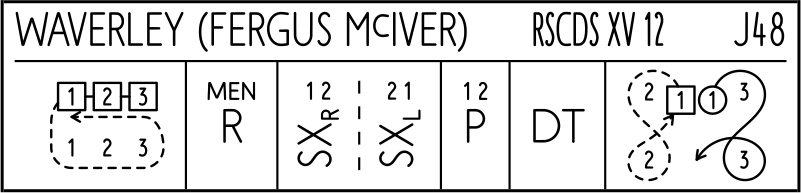
1-8
1L followed by 2L +3L cross & dance down behind 1+2+3M cross & dance back to places
9-16
1M+2M+3M repeat dancing round behind Ladies back to place
17-24
1M+2M also 1L+2L, set to each other & change places RH, set & change back LH ready for …
25-32
1s+2s dance Poussette, 1s end BtoB in centre facing own sides ready for Double Triangles
33-40
1s dance Double Triangles & end side by side facing out on Ladies’ side between 2L+3L
41-48
1s lead out between 2L+3L, cast 1L up & 1M down, meet in middle & lead out between 2M+3M, 1s cast 1L up & 1M down to end in 2nd place own sides
E-Cribs
1-8
1W followed by 2W+3W chase cclw behind 1M+2M+3M to places
9-16
1M followed by 2M+3M repeat clw round the W
17-24
1c facing 2c set | change place RH ; set | change place LH ready for
25-32
1c+2c Poussette, 1c finish BtoB in the middle facing own side for
33-40
DTr, 1c finish facing W side NHJ 1W above 1M
41-48
1c dance out between 2W & 3W, 1W casts up and 1M casts down, meet in the middle ; cast as before, between 2M & 3M, finish in 2pl

Заметки
Source: Twenty Four Country Dances with Figures by Mr Wilson for the year 1816.
Note: on each second repetition of the dance, 1st couple dance out between 2nd and 3rd men and, retaining nearer hands, dance down to fourth place as 3rd couple step up.
Waverley
(or “Fergus McIver”)
Waverley, or 'Tis Sixty Years SInce
, published anonymously in 1814,
was the first novel written by Sir Walter Scott.
The subtitle hints at the theme of the story, the Jacobite Rising of 1745,
about which, from his position in his time, Soctt seems to have mixed emotions.
Throughout his literary career Scott had the ability
to lift less than admirable characters and deplorable events out of history
and, by draping them with sufficient nobility and glamour,
make them not only palatable but highly acceptable to the gentility of the early 19th century
who read his long narrative poems and novels avidly.
Certainly,
Waverley
was a perfect example of Scott’s ostrich-like attitude toward historic realities.
Gone where the primitive agony of battle,
the inhumanity of villains
and any projected comprehension of the terrible sufferings of the innocent.
Scott wrote what people would enjoy reading.
The hero of
Waverley
is Captain Edward Waverley,
an English officer supposedly posted to a regiment of dragoons in Scotland,
although he did not spend much time on his military duties.
Son of a royalist and nephew of an English Jacobite,
Waverley falls in among a noble family of Scottish Jacobites
and from then on it is the Jacobites’ story.
The young officer is merely a puppet of the author, a literary device,
employed to enable Scott to tell the real story.
Actually, Waverley himself is a bit of a prig, lovelorn and rejected,
unjustly disgraced and falsely accused of treason,
involved with, yet remote from, the trials and tribulations of the Jacobites.
The true hero of the novel is the Highland chieftain, Fergus Mac-Ivor Vich Ian Vohr,
whom Waverley visits at his ancient stronghold at Glennaquoich.
“When Fergus and Waverley met,
the latter was struck with the peculiar grace and dignity of the Chieftain’s figure.
Above middle size, and finely proportioned,
the Highland dress, which he wore in its simplest mode, set off his person to great advantage.
He wore the trews, or close trowsers, made of tartan, chequered scarlet and white …
His countenance was decidedly Scottish, with all the peculiarities of the northern physiognomy,
but yet had so little of its harshness and exaggeration,
that it would have been pronounced in any country extremely handsome …
In short, the countenance of the Chieftain resembled a smiling summer’s day,
in which, not withstanding, we are made sensible by certain, though slight signs,
that it may thunder and lighten before the close of evening.”
The plot runs parallel to all major events of 1745 and 1746 and the aftermath of the rising,
with Waverley an interested bystander in the right place at the right time.
He is at Holyrood in time to meet the newly arrived Prince Charles Edward
and he was also at Carlisle to attend the trial of Fergus Mac-Ivor and Evan Dhu Maccombich,
Fergus’ loyal henchman.
The chieftain may have been a defeated and captured Jacobite but his spirit remained intact.
Perhaps the greatest scene in the whole novel was his dramatic reply to the judge at his trial.
“There was no mistaking the stately form and noble features of Fergus Mac-Ivor,
although his dress was squalid
and his countenance was tinged with the sickly yellow hue of long and close confinement.
By his side was Evan Maccombich.
Edward felt sick and dizzy as he gazed on them;
but he was recalled to himself as the Clerk of the Arraigns pronounced the solemn words:
‘Fergus Mac-Ivor of Glennaquoich, otherwise called Vich Ian Vohr,
and Evan Mac-Ivor, in the Dhu of Tarrascleugh, otherwise called Evan Dubh,
otherwise called Evan Maccombich, or Evan Dhu Maccombich –
you, and each of you, stand attainted of high treason.
What have you to say for yourselves why the Court should not pronounce judgement against you,
that you die according to law?’
“Fergus, as the presiding Judge was putting on the fatal cap of judgement,
placed his own bonnet upon his head, regarded him with a steadfast and stern look,
and replied in a firm voice,
‘I cannot let this numerous audience suppose that to such an appeal I have no answer to make.
But what I have to say, you would not bear to hear, for my defence would be your condemnation.
Proceed, then, in the name of God, to do what is permitted to you.
Yesterday, and the day before, you have condemned loyal and honourable blood
to be poured forth like water.
Spare not mine.
Were that of all my ancestors in my veins, I would have peril’d it in this quarrel.’
He resumed his seat, and refused again to rise.”
Sentenced to death as a traitor, Fergus was defian tto the end. On his way to execution –
“There was a momentary stop at the gateway,
while the governor of the Castle and the High Sheriff went through a short ceremony,
the military officer there delivering over the persons of the criminals to the civil power.
‘God save King George!’ said the High Sheriff.
When the formality concluded, Fergus stood erect in the sledge,
and with a firm and steady voice replied,
‘God save King
James
!’
These were the last words which Waverley heard him speak.”
Scottish streets and gardens, a bridge, a railway station,
at least one hotel and two Clyde steamers were named in honour of Waverley.
It is too bad that nothing seems to bear the name of Fergus Mac-Ivor Vich Ian Vohr.
From “Scotland Dances”, by Eugenia (Jeannie) Callander Sharp
(Used by permission.)
Note: on each second repetition of the dance, 1st couple dance out between 2nd and 3rd men and, retaining nearer hands, dance down to fourth place as 3rd couple step up.
Waverley
(or “Fergus McIver”)
Waverley, or 'Tis Sixty Years SInce
, published anonymously in 1814,
was the first novel written by Sir Walter Scott.
The subtitle hints at the theme of the story, the Jacobite Rising of 1745,
about which, from his position in his time, Soctt seems to have mixed emotions.
Throughout his literary career Scott had the ability
to lift less than admirable characters and deplorable events out of history
and, by draping them with sufficient nobility and glamour,
make them not only palatable but highly acceptable to the gentility of the early 19th century
who read his long narrative poems and novels avidly.
Certainly,
Waverley
was a perfect example of Scott’s ostrich-like attitude toward historic realities.
Gone where the primitive agony of battle,
the inhumanity of villains
and any projected comprehension of the terrible sufferings of the innocent.
Scott wrote what people would enjoy reading.
The hero of
Waverley
is Captain Edward Waverley,
an English officer supposedly posted to a regiment of dragoons in Scotland,
although he did not spend much time on his military duties.
Son of a royalist and nephew of an English Jacobite,
Waverley falls in among a noble family of Scottish Jacobites
and from then on it is the Jacobites’ story.
The young officer is merely a puppet of the author, a literary device,
employed to enable Scott to tell the real story.
Actually, Waverley himself is a bit of a prig, lovelorn and rejected,
unjustly disgraced and falsely accused of treason,
involved with, yet remote from, the trials and tribulations of the Jacobites.
The true hero of the novel is the Highland chieftain, Fergus Mac-Ivor Vich Ian Vohr,
whom Waverley visits at his ancient stronghold at Glennaquoich.
“When Fergus and Waverley met,
the latter was struck with the peculiar grace and dignity of the Chieftain’s figure.
Above middle size, and finely proportioned,
the Highland dress, which he wore in its simplest mode, set off his person to great advantage.
He wore the trews, or close trowsers, made of tartan, chequered scarlet and white …
His countenance was decidedly Scottish, with all the peculiarities of the northern physiognomy,
but yet had so little of its harshness and exaggeration,
that it would have been pronounced in any country extremely handsome …
In short, the countenance of the Chieftain resembled a smiling summer’s day,
in which, not withstanding, we are made sensible by certain, though slight signs,
that it may thunder and lighten before the close of evening.”
The plot runs parallel to all major events of 1745 and 1746 and the aftermath of the rising,
with Waverley an interested bystander in the right place at the right time.
He is at Holyrood in time to meet the newly arrived Prince Charles Edward
and he was also at Carlisle to attend the trial of Fergus Mac-Ivor and Evan Dhu Maccombich,
Fergus’ loyal henchman.
The chieftain may have been a defeated and captured Jacobite but his spirit remained intact.
Perhaps the greatest scene in the whole novel was his dramatic reply to the judge at his trial.
“There was no mistaking the stately form and noble features of Fergus Mac-Ivor,
although his dress was squalid
and his countenance was tinged with the sickly yellow hue of long and close confinement.
By his side was Evan Maccombich.
Edward felt sick and dizzy as he gazed on them;
but he was recalled to himself as the Clerk of the Arraigns pronounced the solemn words:
‘Fergus Mac-Ivor of Glennaquoich, otherwise called Vich Ian Vohr,
and Evan Mac-Ivor, in the Dhu of Tarrascleugh, otherwise called Evan Dubh,
otherwise called Evan Maccombich, or Evan Dhu Maccombich –
you, and each of you, stand attainted of high treason.
What have you to say for yourselves why the Court should not pronounce judgement against you,
that you die according to law?’
“Fergus, as the presiding Judge was putting on the fatal cap of judgement,
placed his own bonnet upon his head, regarded him with a steadfast and stern look,
and replied in a firm voice,
‘I cannot let this numerous audience suppose that to such an appeal I have no answer to make.
But what I have to say, you would not bear to hear, for my defence would be your condemnation.
Proceed, then, in the name of God, to do what is permitted to you.
Yesterday, and the day before, you have condemned loyal and honourable blood
to be poured forth like water.
Spare not mine.
Were that of all my ancestors in my veins, I would have peril’d it in this quarrel.’
He resumed his seat, and refused again to rise.”
Sentenced to death as a traitor, Fergus was defian tto the end. On his way to execution –
“There was a momentary stop at the gateway,
while the governor of the Castle and the High Sheriff went through a short ceremony,
the military officer there delivering over the persons of the criminals to the civil power.
‘God save King George!’ said the High Sheriff.
When the formality concluded, Fergus stood erect in the sledge,
and with a firm and steady voice replied,
‘God save King
James
!’
These were the last words which Waverley heard him speak.”
Scottish streets and gardens, a bridge, a railway station,
at least one hotel and two Clyde steamers were named in honour of Waverley.
It is too bad that nothing seems to bear the name of Fergus Mac-Ivor Vich Ian Vohr.
From “Scotland Dances”, by Eugenia (Jeannie) Callander Sharp
(Used by permission.)
Видео 1
Demonstration quality

Видео 2
Reasonable
Видео 3
Social
Видео 4
Social
Видео 5
Animation